What native stablecoin infrastructure means
Building native stablecoin infrastructure requires a fundamental shift in how you view digital assets. It is not merely about moving money faster; it is about removing the intermediaries that traditionally sit between the asset and the user. When we talk about "native" stablecoins, we are distinguishing them from their wrapped or bridged counterparts. A wrapped asset is a tokenized representation of a coin held in custody elsewhere, relying on complex bridge contracts to maintain parity. Native stablecoins, by contrast,, are issued directly on the blockchain, eliminating the need for third-party custodians or complex bridge contracts that introduce smart contract risk.
This distinction matters because it directly impacts trust assumptions and settlement risk. According to Stripe, stablecoin infrastructure is the set of systems that keep stablecoins functioning by maintaining steady value, reliable transfers, and predictable settlement times. When a stablecoin is native to the chain, it inherits the security and finality of that blockchain’s consensus mechanism. There is no separate custodian to fail, no bridge to exploit, and no counterparty risk hidden in a smart contract layer.
The result is a more robust financial primitive. As noted in discussions around platforms like Sui, native stablecoins reduce trust assumptions by being issued and supported directly on the chain, reflecting a maturing DeFi environment. For businesses, this means lower operational overhead and higher confidence in the integrity of the payment rails. You are no longer betting on a bridge’s code; you are betting on the blockchain’s consensus.
This approach aligns with the broader industry move toward efficiency. McKinsey and other financial institutions have highlighted that native issuance reduces the friction points inherent in cross-chain transfers. By keeping the asset and its settlement layer on the same plane, you simplify the technical stack and reduce the attack surface for potential exploits. This is not just a technical preference; it is a strategic decision to build infrastructure that is resilient by design.
Map your settlement and compliance needs
Before writing code or choosing a partner, you must define the flow of value. The difference between native stablecoin infrastructure and traditional fiat rails is speed, but it also demands a different compliance posture. You need to determine if your users require traditional banking bridges or if pure crypto-to-crypto settlement suffices.
Determine your fiat on/off ramp requirements
If your users are new to crypto, they likely need to move money from a bank account to a stablecoin and back. This requires a fiat on/off ramp. Providers like Stripe (formerly Bridge) and BVNK excel here by offering virtual accounts that act as a bridge between the banking system and the blockchain [src-serp-2].
If your business is purely B2B or serves a crypto-native audience, you may only need crypto-to-crypto settlement. In this case, you can skip the complex fiat integration and focus on wallet infrastructure and liquidity pools. Skipping unnecessary fiat rails reduces regulatory overhead and operational cost.
Identify virtual account needs
Virtual accounts provide a traditional banking interface for crypto transactions. They allow users to deposit fiat into a local bank account, which is then converted to stablecoins on-chain. This is critical for businesses that need to issue refunds or handle chargebacks, as it creates an audit trail that traditional finance partners recognize.
Assess regulatory limits to account for
Stablecoin infrastructure is heavily regulated. You must identify which jurisdictions your users inhabit and apply the appropriate KYC/AML checks. Stripe’s infrastructure guide emphasizes that maintaining steady value and reliable transfers requires strict adherence to these rules [src-serp-7].
- US-based users: Expect strict FinCEN and OFAC compliance.
- EU-based users: Prepare for MiCA (Markets in Crypto-Assets) regulation.
- Global users: Implement tiered KYC based on transaction size.
Checklist for infrastructure assessment
Use this checklist to ensure you haven’t missed a critical compliance or operational requirement before selecting a provider.
-
Define user geography and corresponding regulatory requirements
-
Determine if fiat on/off ramps are necessary for your target audience
-
Assess if virtual accounts are needed for refund or chargeback handling
-
Identify required KYC/AML providers and integration points
-
Evaluate settlement speed requirements (real-time vs. batched)
Choose the right infrastructure provider
Building native stablecoin infrastructure requires a partner that can bridge the gap between traditional finance rails and blockchain settlement. You are not just buying an API; you are selecting a custodian for your company's liquidity and compliance posture. The decision hinges on three factors: API depth, supported chains, and institutional readiness.
Stripe (via its acquisition of Bridge) remains the gold standard for fiat integration. Their infrastructure allows you to receive, store, convert, issue, and spend stablecoins with a single endpoint. BVNK offers a similar end-to-end experience, focusing heavily on virtual accounts and fiat on/off ramps for non-crypto teams. Crossmint provides a robust developer experience with a focus on embedded crypto capabilities and wallet abstraction.
Comparison of Top-Tier Providers
The table below compares the core capabilities of the leading infrastructure providers. Use this to quickly identify which provider aligns with your technical stack and compliance requirements.
| Provider | API Depth | Supported Chains | Fiat Integration |
|---|---|---|---|
| Stripe (Bridge) | End-to-end (Receive, Store, Convert, Issue, Spend) | Multi-chain (EVM, Solana, etc.) | Native Virtual Accounts & Ramps |
| BVNK | High (Virtual Accounts, Ramps, Settlement) | Multi-chain (EVM, Solana, TRON, etc.) | Native Virtual Accounts & Ramps |
| Crossmint | High (Embedded Crypto, Wallets, APIs) | Multi-chain (EVM, Solana, Polygon, etc.) | Via Partners (e.g., Stripe, MoonPay) |
Strategic Considerations
When evaluating these providers, prioritize institutional readiness. This means looking beyond the API documentation to assess their compliance frameworks, insurance coverage, and historical uptime. For example, Stripe’s integration of Bridge means you inherit their banking relationships, which can significantly reduce the friction of onboarding fiat liquidity. BVNK’s strength lies in its multi-chain settlement layer, which can be advantageous if you operate across fragmented ecosystems like Solana and TRON. Crossmint excels in user experience, particularly if your goal is to embed crypto payments directly into a consumer-facing application without forcing users to manage external wallets.
Recommended Tools
To help you get started with building native stablecoin infrastructure, here are some recommended tools and resources:


As an Amazon Associate, we may earn from qualifying purchases.
Selecting the right infrastructure provider is a foundational decision. It will dictate your ability to scale, your compliance posture, and your user experience. Take the time to evaluate each option against your specific business needs, and do not hesitate to reach out to their support teams for technical due diligence.
Integrate issuance and wallet solutions
Building native stablecoin infrastructure means connecting your application directly to the blockchain via APIs rather than relying on third-party custodians or wrapped tokens. This approach gives you control over the user experience and reduces friction, but it requires careful handling of cryptographic keys and transaction signing. The goal is to create a seamless flow where users can hold, send, and receive stablecoins without leaving your platform.
To achieve this, you need to integrate two core components: a wallet generation system for secure key management and an issuance API for minting and transferring tokens. Providers like Bridge and Crossmint offer end-to-end platforms that simplify this complexity, allowing businesses to accept, store, and issue stablecoins through a single integration point. Choosing the right infrastructure provider is a strategic decision that impacts your security posture and operational costs.
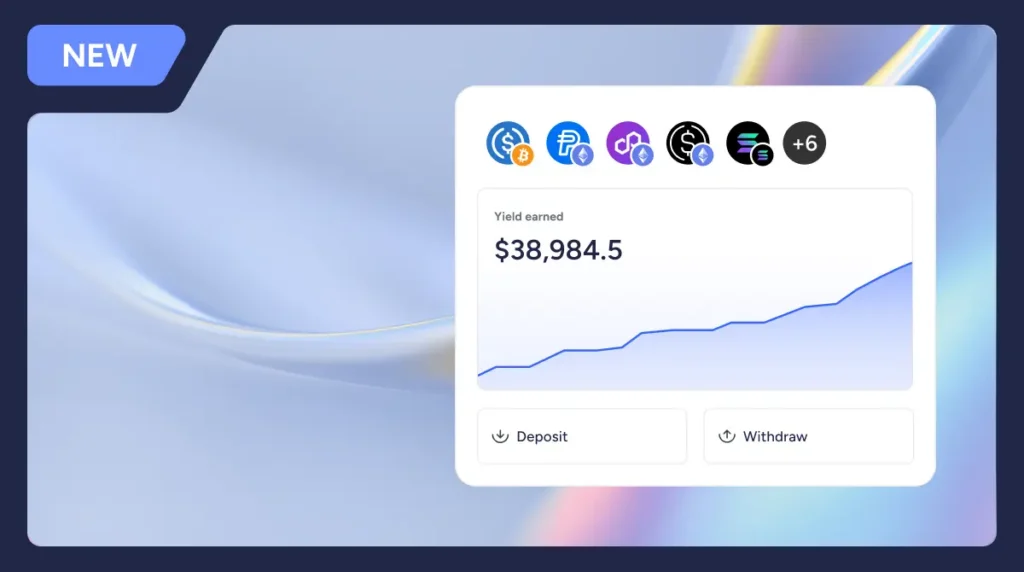
Start by integrating a wallet-as-a-service solution that handles key generation and storage. Instead of managing private keys yourself, use a provider that offers multi-party computation (MPC) or hardware security module (HSM) integration. This ensures that no single point of failure exists for your users' funds. The wallet generation API should return a unique address for each user, allowing you to track balances and initiate transactions on their behalf.
Once wallets are active, integrate an issuance API to handle the minting and burning of tokens. This API should support multiple stablecoins (e.g., USDC, USDT) and allow you to trigger transfers based on user actions. Ensure the API provides webhook support so your backend can confirm transaction finality on the blockchain. This step is critical for maintaining accurate ledger balances within your application.
Secure your integration by implementing a robust transaction signing workflow. Every outgoing transaction must be signed using the user's or your custodial private key, depending on your architecture. Use a signing service that supports batch operations to reduce gas costs and improve speed. Always validate transaction parameters on your server before sending them to the blockchain to prevent errors or exploits.
Before going live, thoroughly test your integration using sandbox environments provided by your infrastructure partners. Simulate various scenarios, including failed transactions, network congestion, and edge cases like insufficient funds. This testing phase helps identify security vulnerabilities and ensures that your user experience remains smooth under pressure.
Monitor market liquidity and peg stability
A stablecoin is only as reliable as its ability to hold value and move money without friction. While native stablecoins settle directly on-chain, wrapped versions introduce intermediary layers that can obscure true liquidity depth. Tracking the health of your chosen asset requires more than watching the headline price; you need to see the plumbing.
Use live data tools to monitor trading volume and order book depth. A wide spread between buy and sell orders signals thin liquidity, which can cause slippage during high-volume periods. For native tokens, verify that liquidity pools are locked or governed by transparent mechanisms, unlike some wrapped assets where the underlying reserve status is harder to audit in real time.
Peg stability is your primary risk indicator. Even a 0.1% deviation can signal reserve stress or market panic. Keep an eye on on-chain metrics like total supply changes and exchange inflows, which often precede price movements. If the peg breaks, liquidity can vanish instantly as arbitrageurs pull back.
Regulatory news also impacts stability. Official updates from bodies like the SEC or EU regulators can shift market sentiment faster than technical indicators. Staying aligned with official sources helps you anticipate shifts before they hit your balance sheet.
No comments yet. Be the first to share your thoughts!