Map your settlement requirements
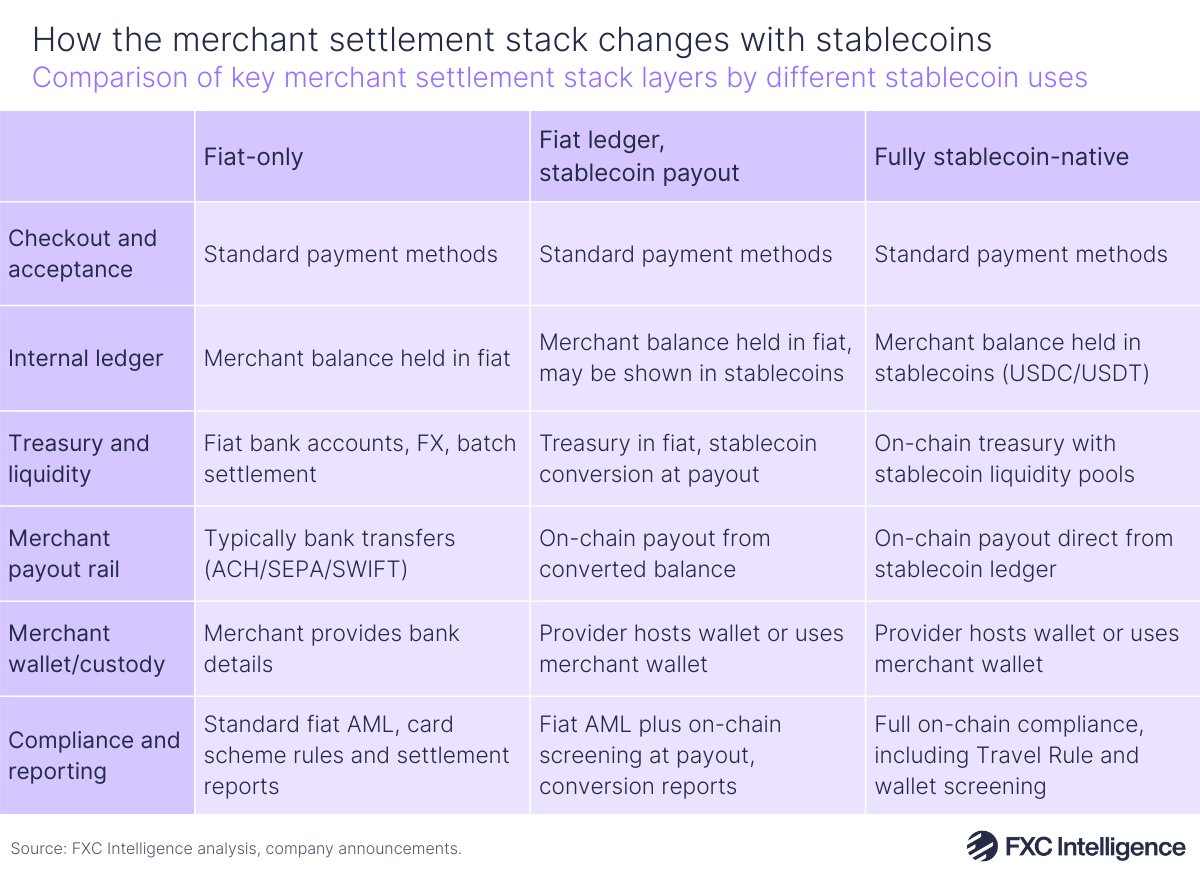
Before selecting a blockchain or custody provider, you must define the exact business use case. Native stablecoin infrastructure is not a one-size-fits-all solution; it requires distinct architectural choices for cross-border payments, B2B supply chain finance, and B2C retail transactions. Mapping these requirements upfront prevents over-engineering your stack or under-provisioning for regulatory compliance.
Identify the settlement layer
Determine whether your primary need is speed, cost, or programmability. For high-volume B2B payments, real-time settlement is often the priority. As noted by Morgan Stanley, stablecoins integrated into programmable infrastructures offer real-time settlement and low transaction costs compared to traditional rails [Morgan Stanley]. This makes them ideal for invoice payments where cash flow velocity directly impacts working capital.
Conversely, if your focus is on monetization and customer engagement, consider how stablecoin wallets can function like traditional bank accounts. Recent analyses suggest that stablecoin-native equivalents can leverage wallets and cards to earn interchange fees, similar to traditional banking models [BVP Atlas]. This approach shifts the infrastructure focus from pure settlement to user experience and financial product integration.
Define compliance boundaries
Your settlement requirements must align with the jurisdictions involved. Cross-border flows require careful mapping of AML (Anti-Money Laundering) and KYC (Know Your Customer) obligations across borders. B2B transactions may allow for more privacy but still require rigorous counterparty verification. B2C applications demand consumer-grade security and easy on-ramping/off-ramping.
Align with existing systems
Finally, evaluate how the new infrastructure integrates with your legacy ERP and accounting systems. Automated reconciliation is a key benefit of blockchain transparency, but only if your internal systems can read and process on-chain data. Map out the data flow from the blockchain to your general ledger to ensure seamless reporting.
By clearly defining these requirements, you build a foundation for a stablecoin infrastructure that is fit for purpose, compliant, and ready to scale.
Select an orchestration layer
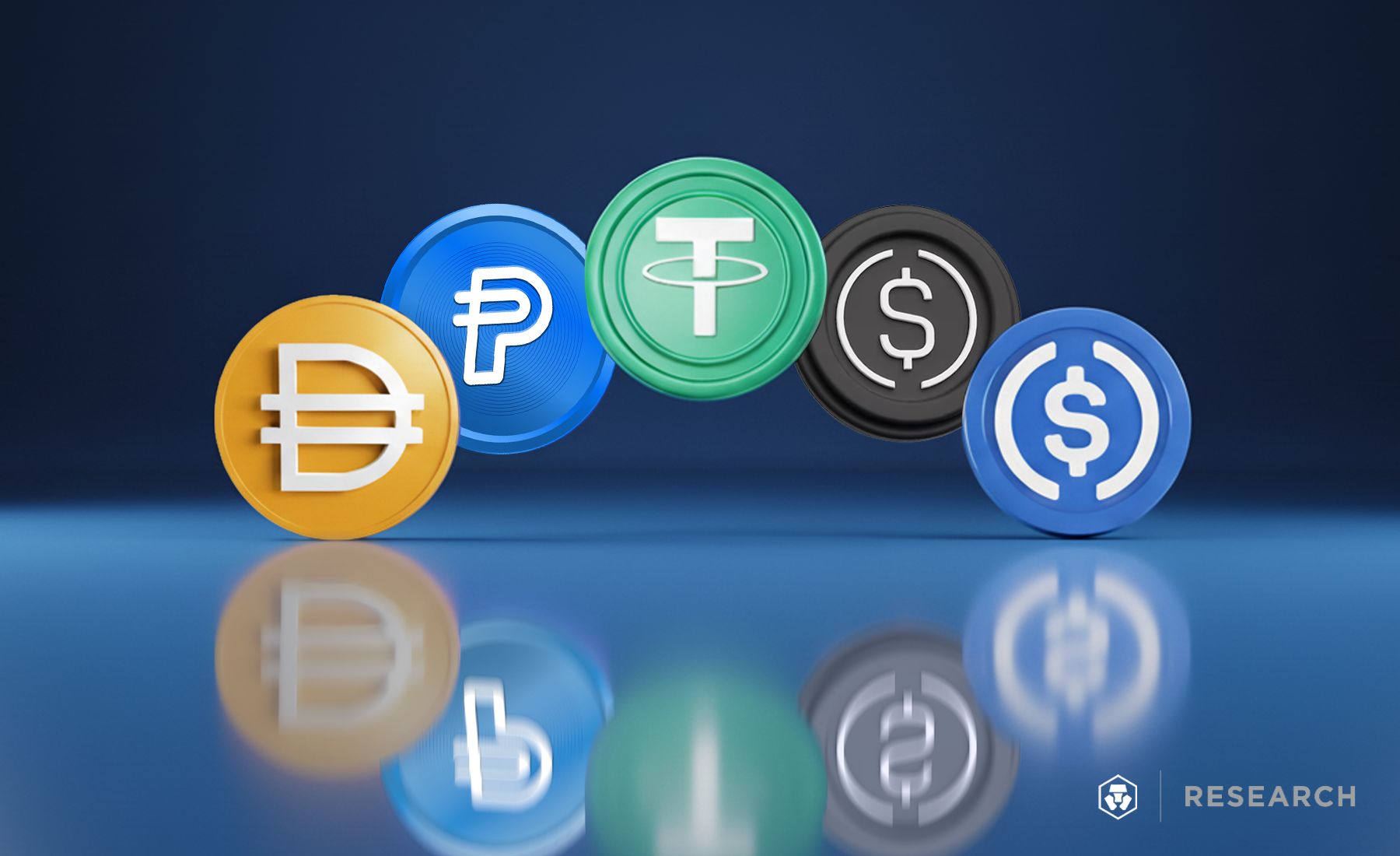
An orchestration layer sits between your application and the blockchain, handling the messy work of multi-chain routing, liquidity aggregation, and fiat on/off ramps. For finance professionals, this is the engine that turns code into spendable capital. You are looking for an API-first provider that abstracts away the complexity of bridging assets across different ledgers while maintaining regulatory compliance.
When evaluating providers like Bridge, Rain, or Eco, focus on three core capabilities: supported chains, settlement speed, and compliance features. The right orchestrator reduces operational friction and ensures your stablecoin infrastructure meets institutional standards.
Compare orchestration options
Use this comparison to quickly identify which platform aligns with your technical and compliance requirements. Each provider offers distinct advantages depending on whether you prioritize speed, breadth of chain support, or enterprise-grade compliance.
| Provider | Supported Chains | Settlement Speed | Compliance Features |
|---|---|---|---|
| Bridge | Multi-chain (EVM, Solana, etc.) | Near-instant | KYC/AML integration, USDC native |
| Rain | EVM-focused | Fast (sub-second) | Enterprise cards, fiat rails |
| Eco | Multi-chain | Variable | Regulatory-ready infrastructure |
Choose the right fit for your stack
Start by mapping your required chains. If you need broad coverage across EVM and non-EVM networks, Bridge offers a comprehensive API suite. For payment-focused applications requiring fast settlement and fiat rails, Rain provides specialized enterprise solutions. Eco serves as a robust alternative for builders seeking modular compliance tools.
Verify that the provider’s API documentation includes clear error handling and retry logic. Stablecoin transactions are high-stakes; your orchestrator must handle failures gracefully without losing funds or user trust. Test the sandbox environment thoroughly before moving to production.


As an Amazon Associate, we may earn from qualifying purchases.
Integrate compliance and custody
Embedding compliance and custody into your stablecoin stack isn’t an afterthought—it’s the foundation. If you build the rails first and bolt on security later, you’ll face costly re-architecture when regulators or partners demand proof of fund safety. The goal is to make KYC/AML checks and secure asset storage native to the transaction flow, not a separate hurdle.
Start by selecting a custody provider that offers multi-party computation (MPC) or threshold signature schemes. These technologies split private keys across multiple parties, eliminating single points of failure. Look for providers that are SOC 2 Type II certified and offer institutional-grade insurance coverage for digital assets. This ensures that even if a single node is compromised, your stablecoins remain safe.
Next, integrate identity verification directly into your onboarding and transaction flows. Use APIs from providers like Chainalysis or Elliptic to screen addresses against sanction lists in real-time. This prevents your platform from inadvertently processing funds linked to illicit activity. Automate these checks so that high-risk transactions trigger manual review, while low-risk ones pass through seamlessly.
Finally, ensure your infrastructure layer connects securely to your bank’s core systems. A secure integration layer allows you to bridge traditional finance with blockchain-native platforms without exposing sensitive data. This connection enables fiat on-ramps and off-ramps that are compliant with local banking regulations. By embedding these elements early, you build a stablecoin infrastructure that is both secure and scalable.
Evaluate providers for SOC 2 Type II certification and insurance coverage. Implement multi-party computation to split private keys, ensuring no single point of failure for your stablecoin reserves.
Embed APIs from providers like Chainalysis or Elliptic into your onboarding flow. Screen all incoming and outgoing addresses against sanction lists to prevent illicit transactions before they settle.

Deploy a secure integration layer that bridges your blockchain platform with your bank’s core systems. This enables compliant fiat on-ramps and off-ramps while protecting sensitive financial data.
Configure yield and liquidity
Once your stablecoin infrastructure is live, the next step is connecting reserves to yield-generating protocols or liquidity pools. This isn't just about passive income; it's about enhancing the value proposition for your users and ensuring the protocol remains solvent during market fluctuations.
Select the Yield Source
Start by choosing where your reserve assets will rest. For major dollar-pegged assets like USDC or USDT, look for protocols with transparent audits and proven track records. You might consider lending protocols for steady, low-risk returns or liquidity pools for higher yields, though the latter carries impermanent loss risks. Always verify the smart contract audits and insurance mechanisms before deploying capital.
Integrate Liquidity Pools
If you opt for liquidity provision, ensure your stablecoin pairs are balanced to minimize slippage. Connect your reserve wallet to the pool using standard integration methods, such as wrapping tokens if necessary. Monitor the pool's depth and fees regularly to adjust your position as market conditions change.
Monitor and Rebalance
Set up automated alerts for yield rates and pool health. Regularly rebalance your reserves to maintain the peg and maximize returns. This ongoing management ensures your infrastructure remains robust and competitive in the evolving DeFi landscape.
Test the settlement pipeline
Before you handle real assets, you need to prove your infrastructure works under load. Treat your sandbox environment like a flight simulator: it’s where you crash so you don’t crash in production. This phase is about validating the entire flow—from token minting and transfer to final settlement and reconciliation—without risking capital.
Start by mapping your transaction lifecycle. Your test suite should cover happy paths (successful transfers) and edge cases (failed transactions, network congestion, and partial settlements). Ensure your smart contracts or core ledger systems handle these gracefully. If you’re integrating with third-party PSPs or liquidity providers, verify that their APIs return consistent status codes during stress tests.
Don’t skip the reconciliation step. It’s common for off-chain ledgers to drift from on-chain reality during complex operations. Run automated scripts that compare your internal database against the blockchain explorer to catch discrepancies early. If your system can’t reconcile a test transaction perfectly, it won’t handle a real one.
Native Stablecoin Infrastructure FAQ
Building stablecoin infrastructure requires navigating complex technical and regulatory layers. Below are answers to the most common questions from finance professionals launching these systems.
How do I choose a custody solution for native stablecoins?
Custody is the backbone of trust. You need institutional-grade key management that complies with SOC 2 Type II standards. Avoid self-custody for operational funds; instead, use multi-signature wallets or qualified custodians who provide proof of reserves. This separation ensures that even if your tech stack fails, the assets remain secure and verifiable.
What compliance frameworks apply to stablecoin infrastructure?
Compliance isn't optional; it's a feature. You must integrate with KYC/AML providers that support real-time transaction monitoring. Depending on your jurisdiction, you may need to adhere to the EU’s MiCA regulation or US state-level money transmitter laws. Building compliance into your smart contract layer from day one prevents costly retrofits later.
Can stablecoin rails replace traditional cross-border payments?
Yes, but with caveats. Stablecoin rails are maturing into production-ready infrastructure, offering a faster and cheaper path for cross-border payments compared to legacy SWIFT networks. However, liquidity fragmentation across chains can still cause slippage. You need robust liquidity aggregators to ensure seamless settlement across different ecosystems.
How do I handle smart contract risks?
Smart contract risk is the highest technical threat. Always use audited, battle-tested codebases from reputable providers. Implement timelocks and pause functions to halt transactions if anomalies are detected. Regular third-party audits are non-negotiable; treat them as part of your operational budget, not an optional expense.
No comments yet. Be the first to share your thoughts!